
Duolingo Alternatives: 13 Apps That Fill the Gaps
Honest Duolingo alternatives grouped by what they add: tutors, courses, real listening and flashcards. Prices, free plans and a weekly mix to try.
Duolingo alternatives are worth looking at once the daily lessons feel easy but real conversations and shows still go too fast. Duolingo is good at building a habit and teaching the basics. What it gives you little of is long listening, natural speech and talking to people. The apps below fill those gaps: tutors and language partners for speaking, structured courses for grammar, input apps and dual subtitles for listening, and flashcards for memory.
Can Duolingo make you fluent?
Can Duolingo make you fluent? On its own, probably not, and Duolingo doesn't claim it will. Here is what the company does say.
In April 2026 Duolingo announced that most learners of English, Spanish, French, German, Italian, Portuguese, Japanese, Korean and Chinese can now study up to B2 on the CEFR scale. Duolingo describes B2 as an independent user: you can interact with speakers, understand fairly complex texts and give your opinion on many topics, though you still miss things and search for words.
Its research is narrower than the headlines suggest. In one study, 273 beginners who used only Duolingo's Spanish course took an independent reading and listening test; those halfway through the B1 content scored on par with fifth-semester university students. In a speaking study, 258 learners took Pearson's Versant test after finishing the A2 units, and about half scored A2 or higher. Both studies were run by Duolingo's own researchers, and neither measures fluency.
So the fair answer: Duolingo can take you a long way on reading, vocabulary and basic listening. Fluency also needs things a lesson app has trouble giving you.
What Duolingo is good at
- A daily habit. Streaks, leagues and five-minute lessons get people to open the app every day, which is often the hardest part.
- The basics. Core vocabulary, simple grammar patterns and the writing system, in small steps.
- Low cost. The main course is free, with ads.
What it doesn't give you
- Lots of real listening. Stories and DuoRadio help, but a few minutes of clear, scripted audio a day is far from the hours of natural speech your ear needs.
- Natural speech. Real people mumble, use slang, talk over each other and speak fast. Lessons are recorded to be easy.
- Long input. You rarely follow one story or one speaker for 20 minutes, which is how you get used to a language's rhythm.
- Conversation with a person who reacts to what you actually say.
So instead of hunting for apps better than Duolingo, ask what to add next.
Duolingo alternatives by what they add
Every Duolingo alternative below covers a different gap. Most people don't need all of them; pick the gap that hurts most.
Speaking with people: italki, Preply, Tandem, HelloTalk
italki and Preply connect you with paid tutors for one-on-one video lessons. Tutors set their own rates, so you can find cheap conversation practice or an exam coach. italki says lessons run from about $5 to $50+ an hour. For many learners this is the fastest fix for "I understand but can't answer".
Tandem and HelloTalk are language exchange apps: you chat with native speakers who want to learn your language. Both are free to start. Tandem's free plan limits you to 10 new conversations a day; HelloTalk's free plan has daily limits on translations and new chats. Paid tiers (Tandem Pro, HelloTalk VIP) lift those limits, with prices shown in the app.
Structured courses: Babbel, Busuu, Pimsleur
If you like Duolingo's step-by-step path but want more explanation, these are the closest apps like Duolingo.
Babbel has longer lessons built around dialogues, with clear grammar notes. On its US prices page the 12-month plan works out to $8.95 a month, and there is a lifetime option.
Busuu has a free plan with ads and the essential course. Premium adds review tools and offline mode, and Premium Plus adds AI conversations and pronunciation feedback. Prices depend on your region and aren't published as one list.
Pimsleur is audio-first: 30-minute lessons where you listen, answer out loud and repeat. It is good for pronunciation and for practising on a walk or in the car. It offers a free lesson and a free trial; subscription prices appear at checkout.
Immersion and input: LingQ, Lingopie, YouTube and Netflix
This group fixes the biggest gap: hours of real language. The idea behind it is comprehensible input, material you mostly understand, in large amounts.
LingQ turns articles, podcasts and YouTube videos into lessons with clickable words and a vocabulary tracker. The free plan lets you save 20 words and phrases and import 5 lessons; Premium costs $14.99 a month or $10 a month on a yearly plan.
Lingopie is a streaming service with its own catalog of shows that have clickable dual subtitles. There is a 7-day free trial, and plans start at $41.97 for three months.
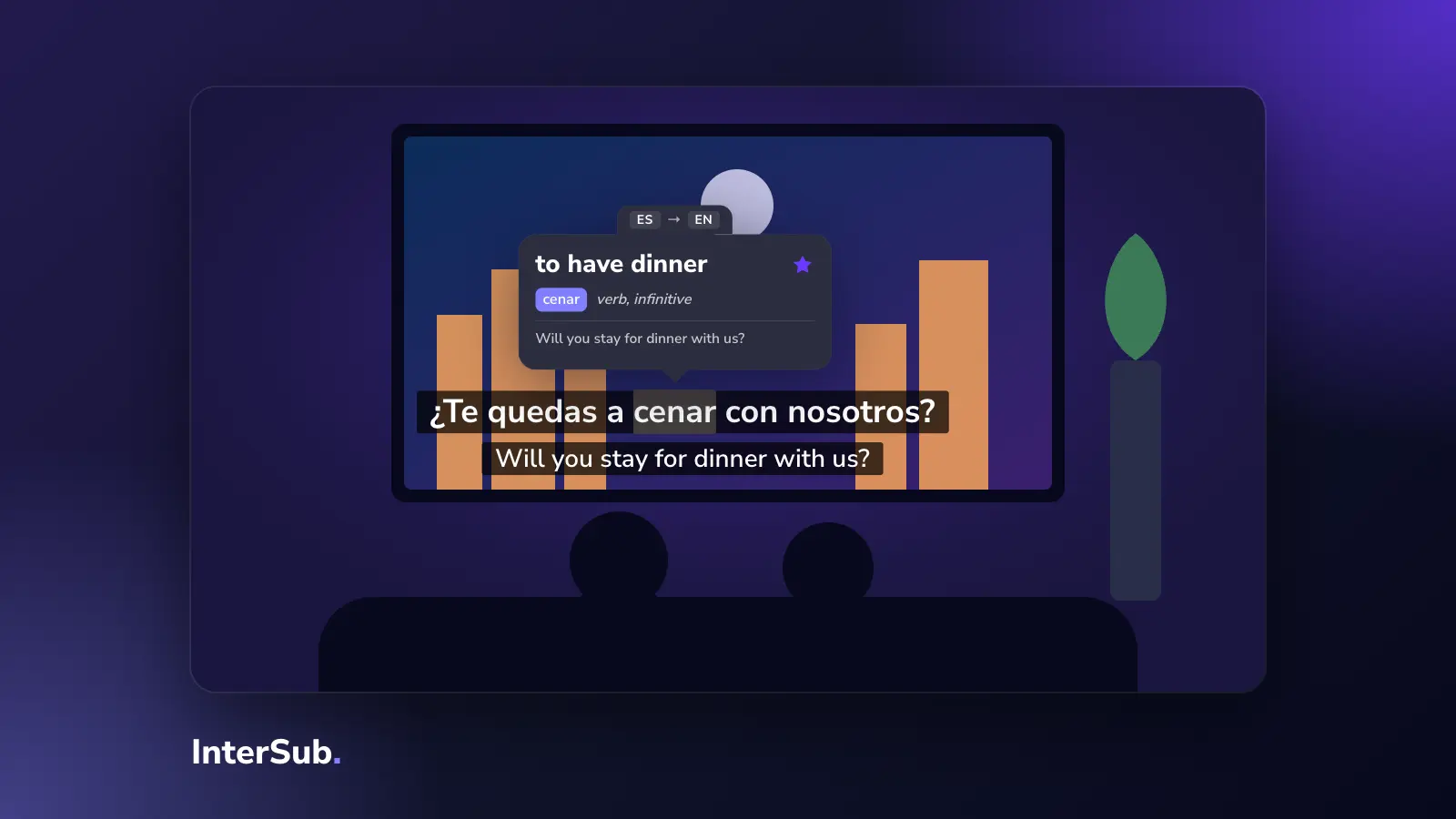
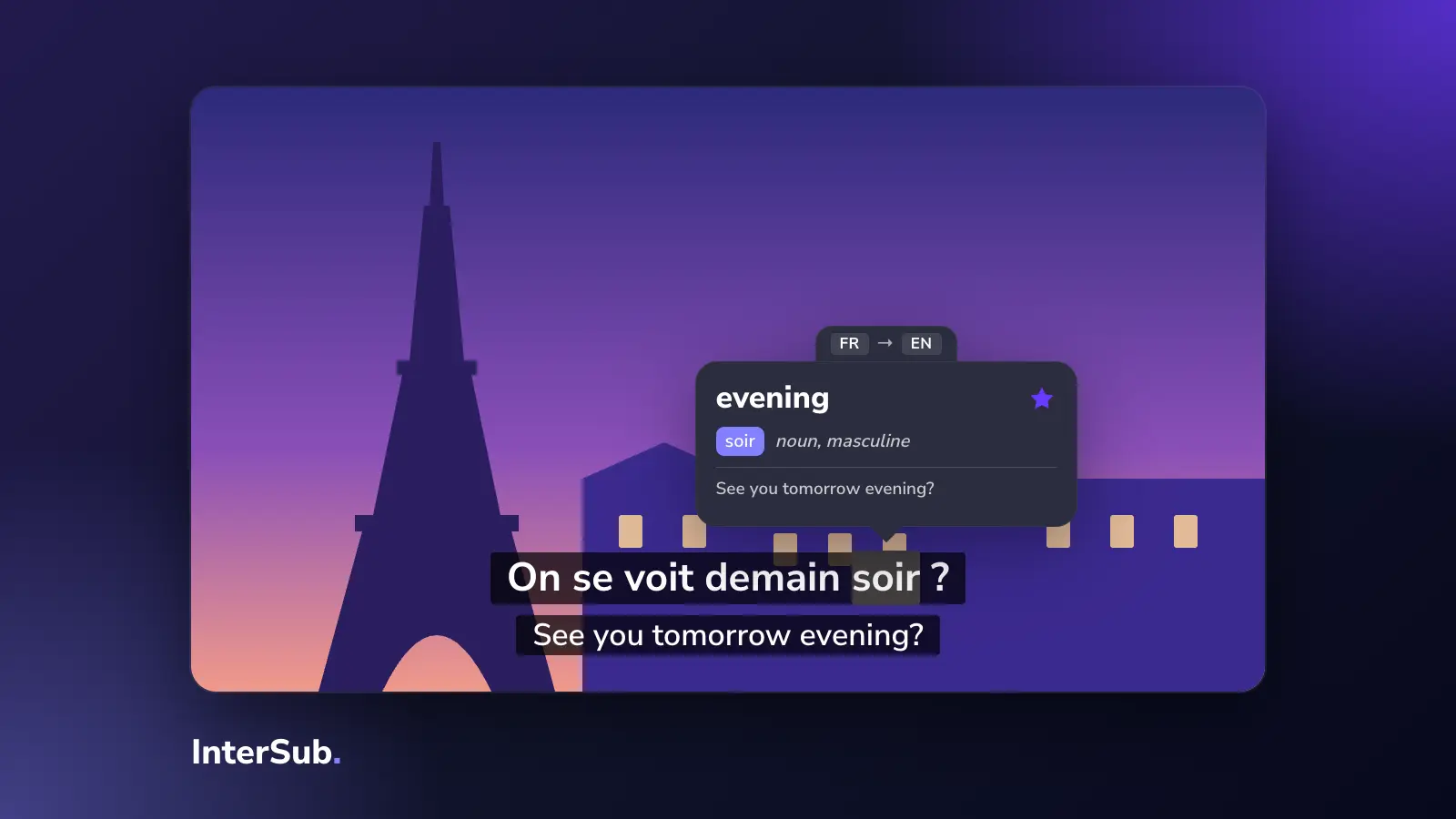
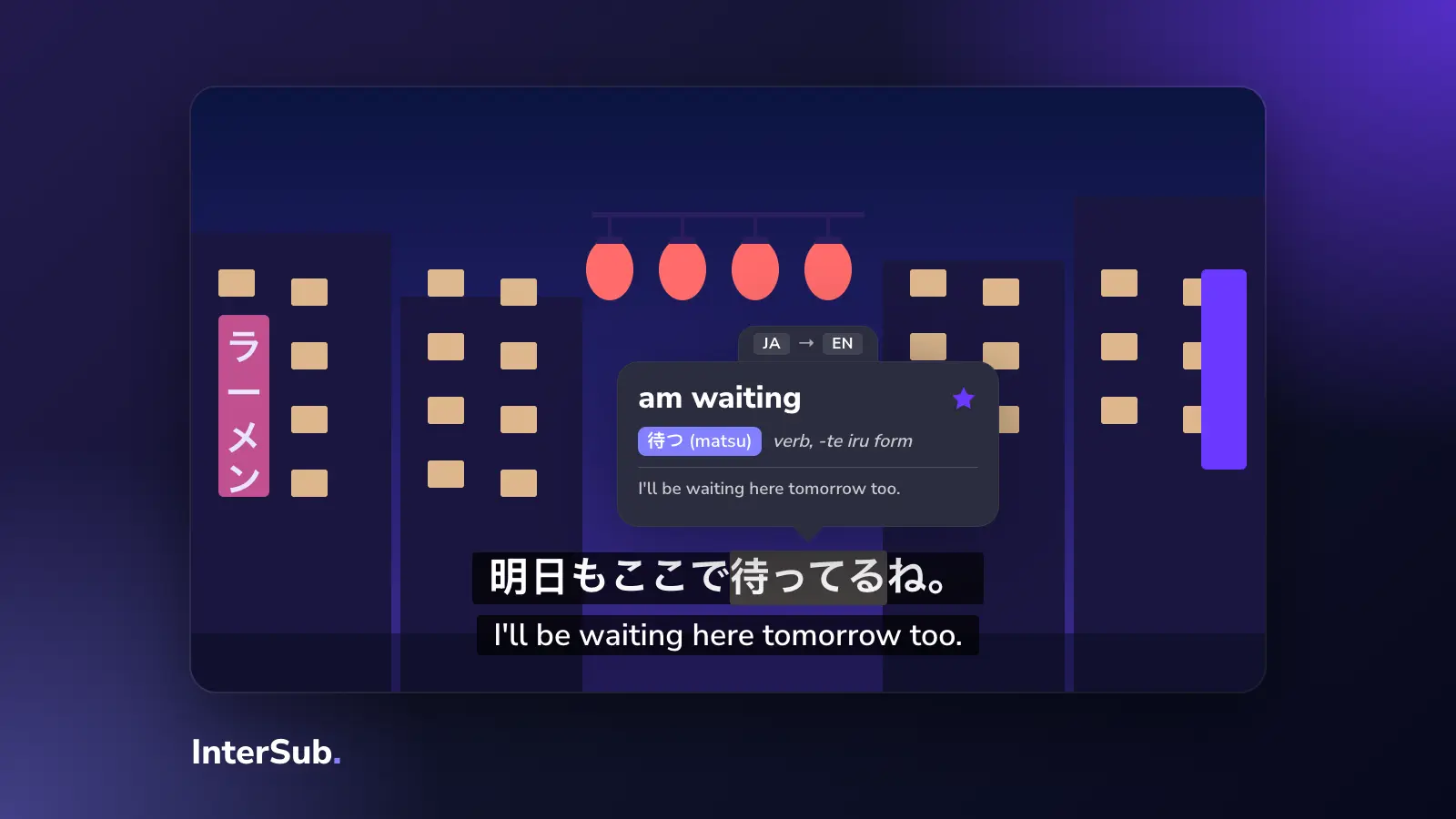
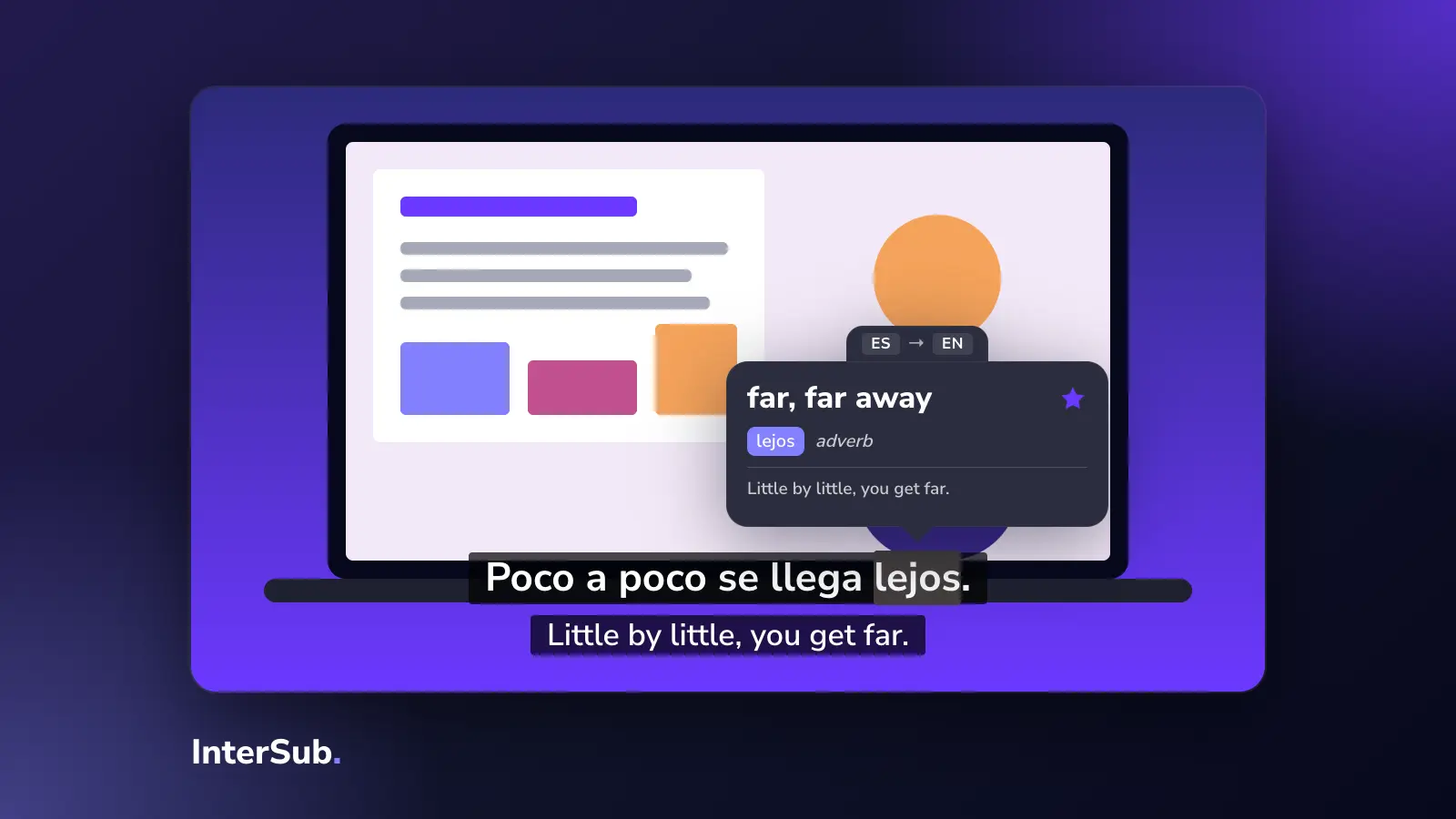
Your own YouTube and Netflix cost nothing extra if you already watch them. A browser extension with dual subtitles shows the original line and a translation at the same time, so you can follow a real show without switching to your native language. InterSub is one option: it works in Chrome, Edge and Firefox on YouTube, Netflix, Prime Video, Disney+, Crunchyroll and more. You hover a word to see its translation in context, and it goes into your Wordbook. The free plan includes unlimited dual subtitles and 15 word lookups a month; Premium starts at $6 a month. Language Reactor, Trancy and Lingopie take different approaches, compared in our Language Reactor alternatives review.
Flashcards and word practice: Anki, InterSub bot, Memrise
Anki is a free spaced-repetition app on desktop and Android; AnkiMobile for iPhone is paid. It looks plain, but it is the tool many serious learners use to keep thousands of words. If you collect words while watching, an anki chrome extension can move them into your deck. In InterSub, your Wordbook can sync with Anki; syncing the full Wordbook needs a paid plan.
InterSub Words bot is our own free Telegram bot for practicing the words you save while watching. Each word comes with its translation, how and when it's used and a few examples in context. Then you write your own example sentences, and an AI tutor points out mistakes in grammar, vocabulary and word usage. After that the word goes into spaced repetition, with three types of questions that rotate. You can answer by voice instead of typing, and ask the tutor any language question between sessions. The bot itself is free. Importing your InterSub words is limited to 5 on the free InterSub plan and unlimited on any paid plan; you can also upload your own words or pick ready-made topic lists (English only for now). You can learn English, German, Spanish, French, Japanese, Chinese, Russian, Korean, Czech or Polish, with explanations in those languages plus Ukrainian and Bulgarian. Open the bot in Telegram or see all the ways to practice your words.
Memrise started as a flashcard app and now mixes vocabulary with short clips of native speakers. It has a free tier, and Pro removes ads and unlocks all features; the price depends on your region.
Duolingo competitors compared
Prices checked on official sites in October 2026. Where a company doesn't publish a price, the table says so.
| App | What it adds | Free plan | Price from | Best for |
|---|---|---|---|---|
| Duolingo | Daily habit, basics | Yes, with ads | Super: shown in app, varies by region | Starting out, staying consistent |
| italki | Paid tutors | No, pay per lesson | About $5/hour (tutor sets rate) | Speaking with feedback |
| Preply | Paid tutors | No, pay per lesson | Set by each tutor | Regular lessons, exam prep |
| Tandem | Chat with native speakers | Yes | Pro: shown in app | Free conversation practice |
| HelloTalk | Chat and corrections | Yes | VIP: shown in app | Texting practice, corrections |
| Babbel | Structured dialogues, grammar | Free trial lessons | $8.95/month on 12-month plan (US) | Clear grammar in short lessons |
| Busuu | Structured course, AI speaking | Yes, with ads | Not published as one list | A course with review tools |
| Pimsleur | Audio speaking drills | Free lesson and trial | Shown at checkout | Pronunciation, learning on the go |
| LingQ | Reading and listening | Yes, 20 saved words | $10/month yearly | Learning from articles and podcasts |
| Lingopie | Shows with dual subtitles | 7-day trial | $41.97 per 3 months | A ready-made show library |
| InterSub | Dual subtitles on your own streaming | Yes, 15 lookups/month | Premium from $6/month | Real shows on YouTube, Netflix and more |
| Anki | Spaced-repetition flashcards | Yes (desktop, Android) | iOS app paid | Keeping large vocabulary |
| InterSub Words bot (Telegram) | Word practice with an AI tutor, spaced repetition, voice answers | Yes, bot is free | Full Wordbook import with any InterSub paid plan | Remembering words you met in shows |
| Memrise | Vocabulary with native-speaker clips | Yes | Pro: varies by region | Light vocabulary practice |
Among Duolingo competitors, none replaces Duolingo and also covers everything it misses. The best alternatives to Duolingo are usually additions.
A sample week: Duolingo plus input
You don't have to choose. Here is a week for someone with 30 to 45 minutes a day, around A2 to B1:
| Day | Duolingo | Add this |
|---|---|---|
| Monday | 1 lesson | 20 min of a YouTube channel in your language, with dual subtitles |
| Tuesday | 1 lesson | 15 min Anki or the InterSub bot: review words from Monday |
| Wednesday | 1 lesson | 30 min tutor or language-exchange call |
| Thursday | 1 lesson | One episode of a show, second line visible only on pause |
| Friday | 1 lesson | 15 min Anki, then 10 min LingQ or a podcast |
| Saturday | Optional | One longer episode or film, as much as you enjoy |
| Sunday | Keep the streak | Rest, or rewatch a favourite scene and repeat lines out loud |
Duolingo keeps the habit going. The added half hour gives you real speech to listen to and a chance to talk. Over a few months, the balance can shift: less app time, more shows and more conversation.
If shows become your main input, start with our guide to two subtitles on Netflix.
Frequently asked questions
Can Duolingo make you fluent?
Not on its own. Duolingo's main courses now go up to B2, and its own studies show solid reading and listening gains, but fluency also needs hours of natural speech and real conversation, which the app gives you little of.
What is better than Duolingo?
No app is better at everything. Tutors on italki or Preply are better for speaking, Babbel, Busuu and Pimsleur are more structured, and LingQ, Lingopie or videos with dual subtitles give you far more real listening.
Is there a free alternative to Duolingo?
Yes. Anki is free on desktop and Android, the InterSub Words bot on Telegram is free for word practice, Tandem and HelloTalk have free plans for chatting with native speakers, Busuu and Memrise have free tiers, and YouTube with a dual subtitle extension costs nothing to start.
What app do polyglots use?
There is no single polyglot app. People who learn many languages usually describe a mix: lots of listening and reading, a flashcard tool such as Anki, and regular conversation with tutors or partners.
Should I quit Duolingo?
Only if it no longer helps you. If the streak keeps you studying every day, keep it and add listening and speaking around it instead of replacing it.