
Shadowing Technique: How to Practice with Real Videos
The shadowing technique for language learners: what it is, why it helps, and a step-by-step routine with YouTube, Netflix and course videos.
The shadowing technique is a way to practice a language by repeating a recording out loud right after the speaker, copying their sounds, rhythm and intonation. You listen to a line, say it the same way, and keep going until your version sounds close to the original. You can do it with any video that has subtitles: a TV show, a YouTube channel, an online course.
Below: where shadowing comes from, what it actually trains, a step-by-step method, the usual mistakes, and how to run it on YouTube or Netflix with a pause after every subtitle line.
What is shadowing?
If you search what is shadowing, half the results are about job shadowing, where you follow a colleague around at work. This article is about language shadowing: speaking along with native speech in the language you are learning.
The method comes from interpreter training. Simultaneous interpreters practiced listening and speaking at the same time by repeating speech in the same language, word for word, a moment behind the speaker. Language teachers in Japan later brought it into English classes, and researchers there have studied it since the 1990s.
Among self-taught learners, the name most often linked with shadowing is Alexander Argüelles, a polyglot who popularized his own version: walk outside briskly with headphones on, stand straight, and repeat the audio out loud, clearly and at the same time as the speaker. You don't have to walk anywhere, but the core is the same: listen and speak together.
Some guides call it the shadow study technique or shadow reading. They all mean roughly the same thing.
Why shadowing helps
Shadowing makes you pay attention to the sound of speech instead of only its meaning. That is the part most learners skip. You can read a sentence and understand it, then fail to recognize the same sentence when an actor says it at full speed.
Here is what you train:
- Listening to fast speech. To repeat a line, you have to hear every word in it, including the short ones that native speakers swallow. Studies with Japanese learners of English (Tamai, Hamada and others) found that shadowing improved listening and word recognition, and that lower-level learners gained the most. A 2025 study in JALT Journal also found that learners who did more repetitions scored higher on listening and remembered more set phrases.
- Rhythm and intonation. Where the stress falls, which words get squeezed together, where the voice goes up. Textbooks rarely teach this, and shadowing makes you copy it directly.
- Ready-made phrases. After saying "I'll get back to you on that" ten times in an actor's voice, you have it as one chunk, not four separate words.
- Speaking without translating. You don't have time to build the sentence in your head. You just say it.
Shadowing won't replace conversation, and it won't fix grammar you don't know. It is a training exercise, like scales on a piano.
How to shadow, step by step
This works for shadowing English or any other language. One short clip, several passes.
1. Choose material at the right level
Pick a clip where you understand most of the words when you read the subtitles. If every line has three unknown words, you will spend the session looking things up. Too easy is better than too hard. More on choosing videos below.
2. Listen first
Play the clip once without speaking. Get the story and the voices. Don't worry about catching every word yet.
3. Read along with subtitles
Play it again with subtitles in the language you are learning. Look up words you don't know. With dual subtitles you see your own language under the original line, so this pass is quick.
4. Shadow with a pause after each line
Now speak. Play one line, pause, say it out loud, copying the speed, stress and tone. Repeat the line if it felt wrong. Strictly speaking this is repeating, not shadowing, but it is the easiest way in, and you need it for the first passes.
5. Shadow without the pause
When the clip feels familiar, turn off the pauses and speak along with the audio, about half a second behind. This is real shadowing. You will stumble at first; that is normal. Keep going instead of stopping at every mistake.
6. Record yourself
Once per session, record your voice over the clip on your phone and listen back. You'll hear things you miss while speaking: a flat intonation, a dropped ending, a vowel from your own language.
Common mistakes
- Material that is too hard. If you can't follow the meaning, you are just copying noise. Go back a level.
- Mumbling. Say the lines at normal volume, as if you were the actor. Quiet whispering trains much less.
- New clip every day. The gains come from repetition. Stay with one clip for several days before moving on.
- Only reading. If your eyes are glued to the subtitles, you are practicing reading aloud. After the first passes, look at the picture and use your ears.
- Long sessions. Shadowing is tiring. Twenty focused minutes beat an hour of half-listening.
How to choose videos for shadowing
Shadowing with videos has one big advantage over audio: you see faces, mouths and gestures, which makes the line easier to remember. Good material:
- Has clear, natural speech. Sitcoms, slice-of-life dramas, vlogs, interviews, TED talks. Avoid action scenes with music over the dialogue.
- Has accurate subtitles in the original language. Auto-generated captions on YouTube often mishear words. For learning, prefer human-made subtitles.
- Uses everyday language. You want lines you might say yourself. A legal drama is great for listening, less so for speaking.
- Has one or two speakers at a time. Group scenes with overlapping voices are hard to follow.
- Is a few minutes long. For a TV show, take one scene, not the whole episode.
If you are not sure what counts as the right level, our guide to comprehensible input explains how to pick material you understand most of. For a Spanish example, see Spanish shows on Netflix; for Japanese, Netflix Japanese subtitles has a list of shows by level.
How to shadow with InterSub
The hard part of shadowing on a video site is the pausing. You end up hitting Space after every line, missing it, rewinding. InterSub has a shadowing mode that does this for you.
- Install InterSub in Chrome, Edge or Firefox.
- Open a video on YouTube, Netflix or another supported site and turn on subtitles in the language you are learning.
- Press S to turn on shadowing. The video now pauses automatically after each subtitle line.
- Set the pause from 1× to 2× the length of the line. Start with 2× so you have time to repeat; shorten it as the clip gets easier.
- Say the line out loud during the pause. If you missed it, rewind with the left arrow and try again.
- When you are ready for real shadowing, press S again to turn the pauses off and speak along with the audio.
Two other settings fit well with shadowing:
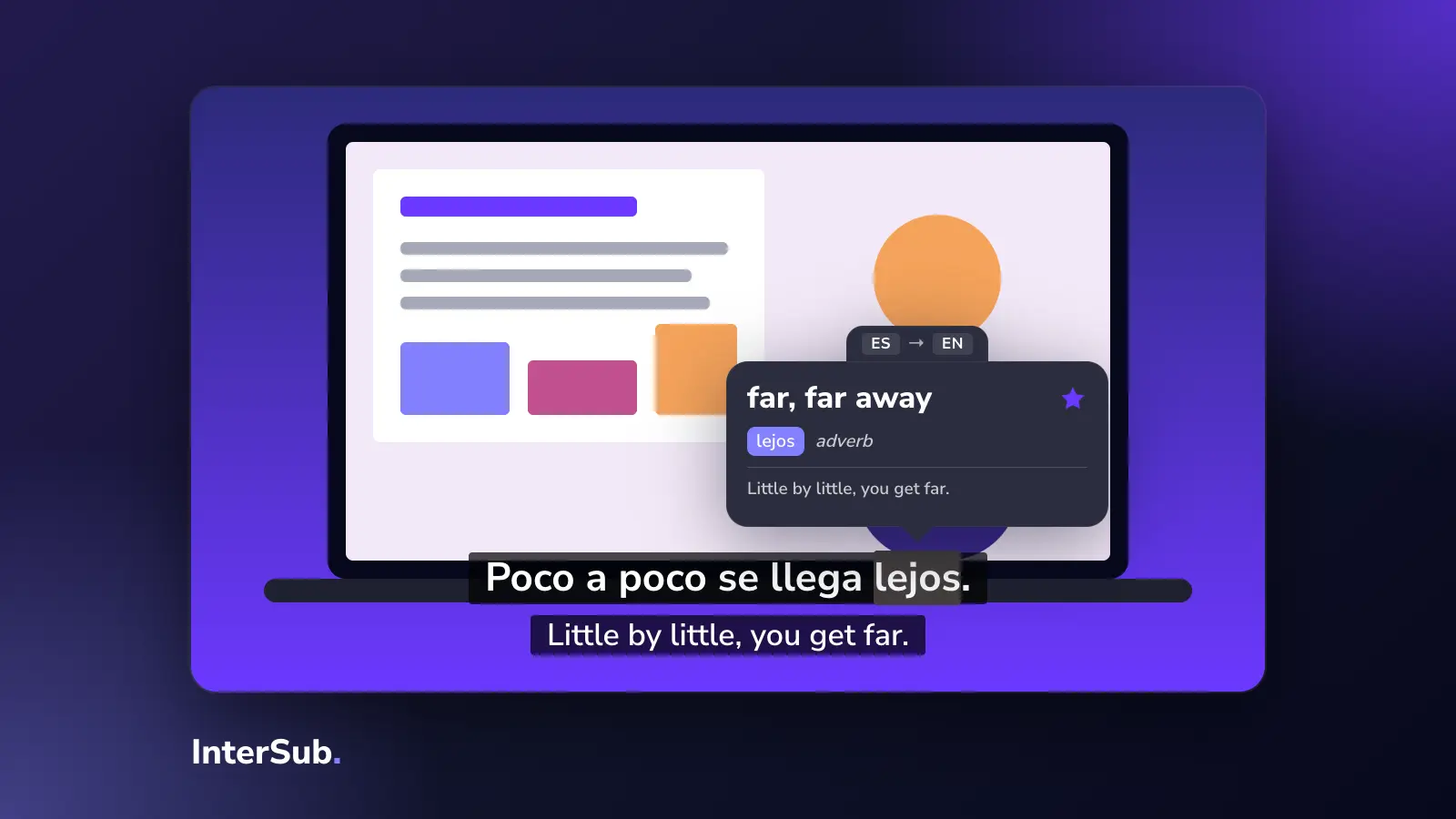
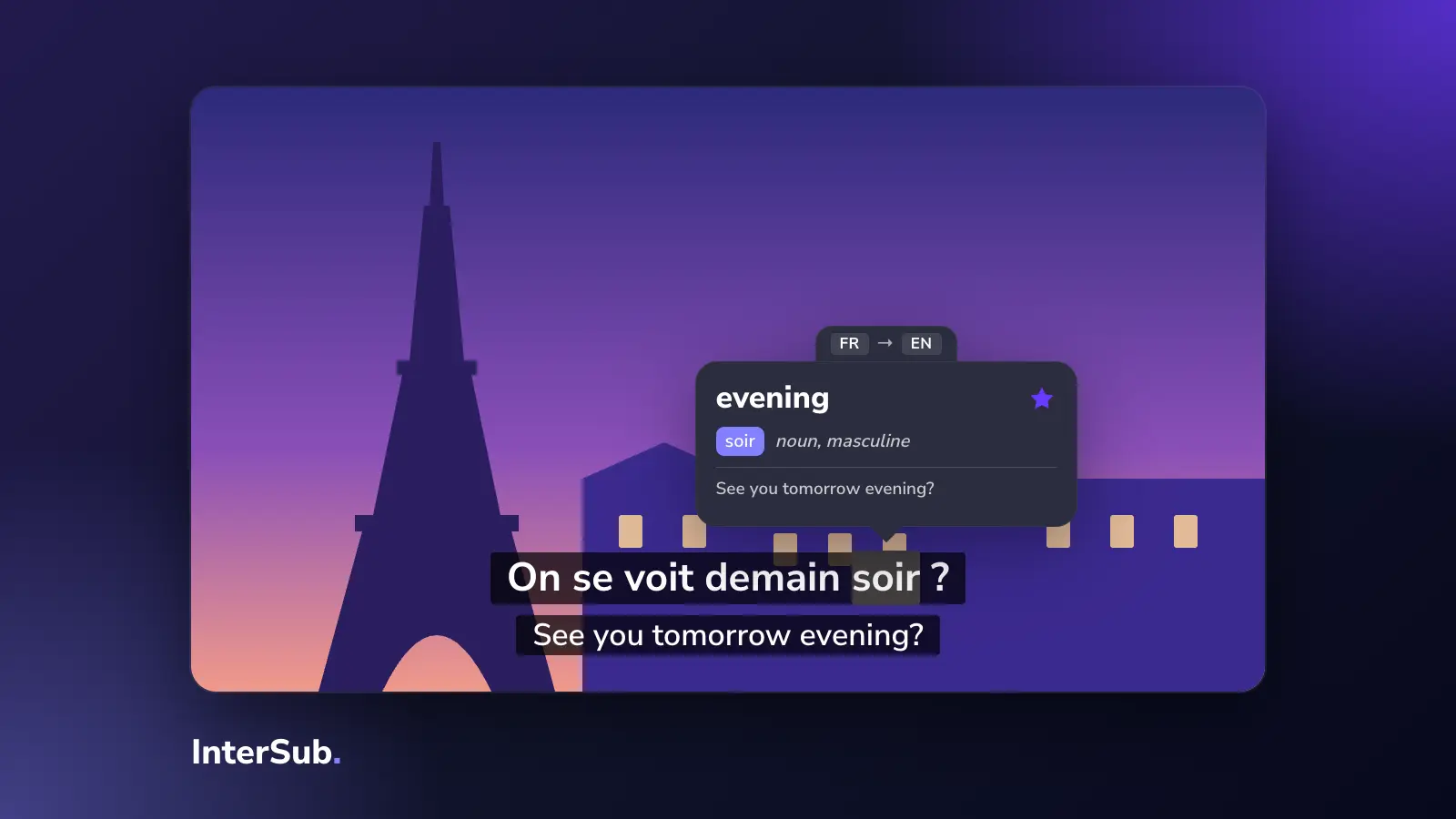
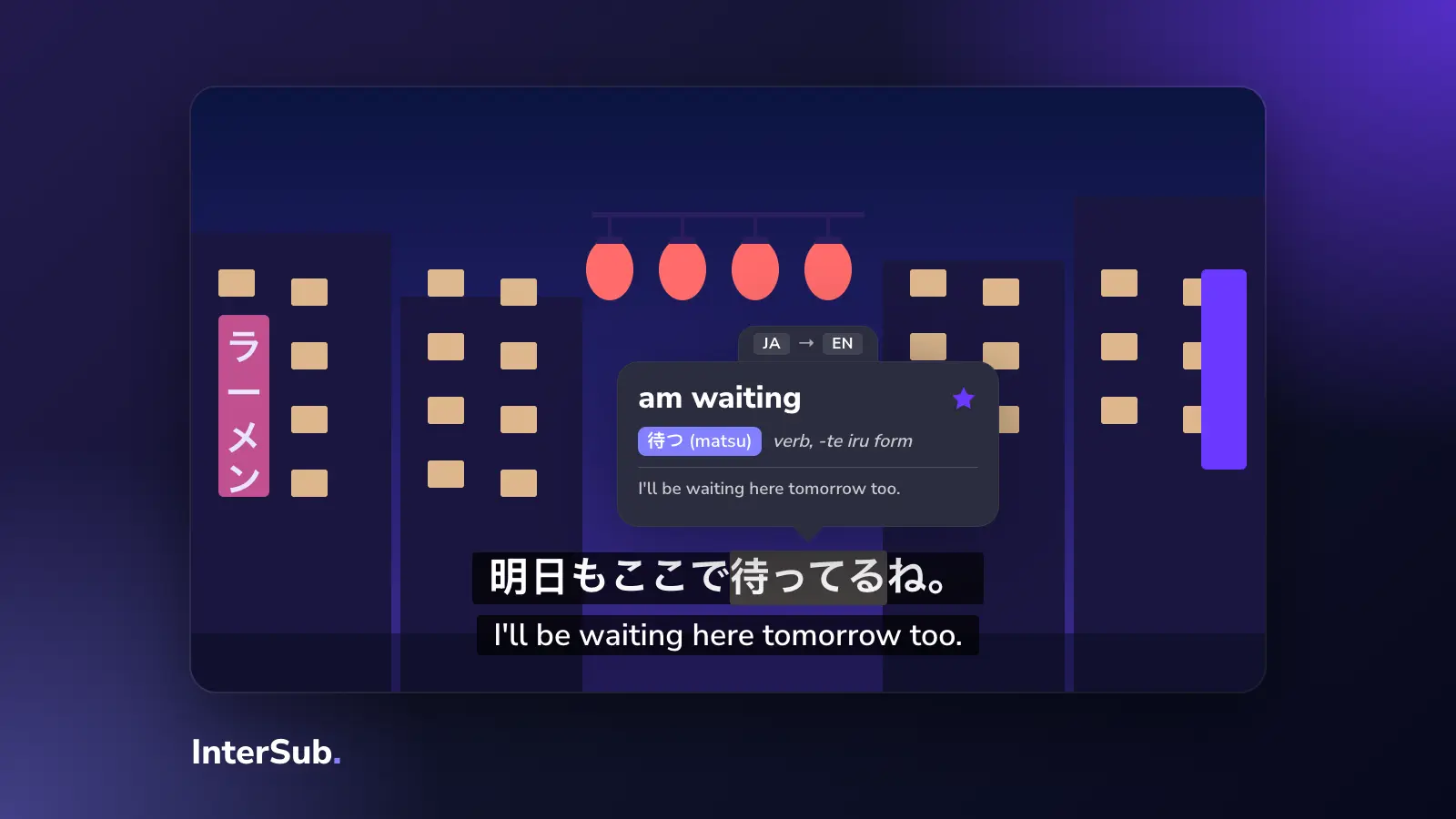
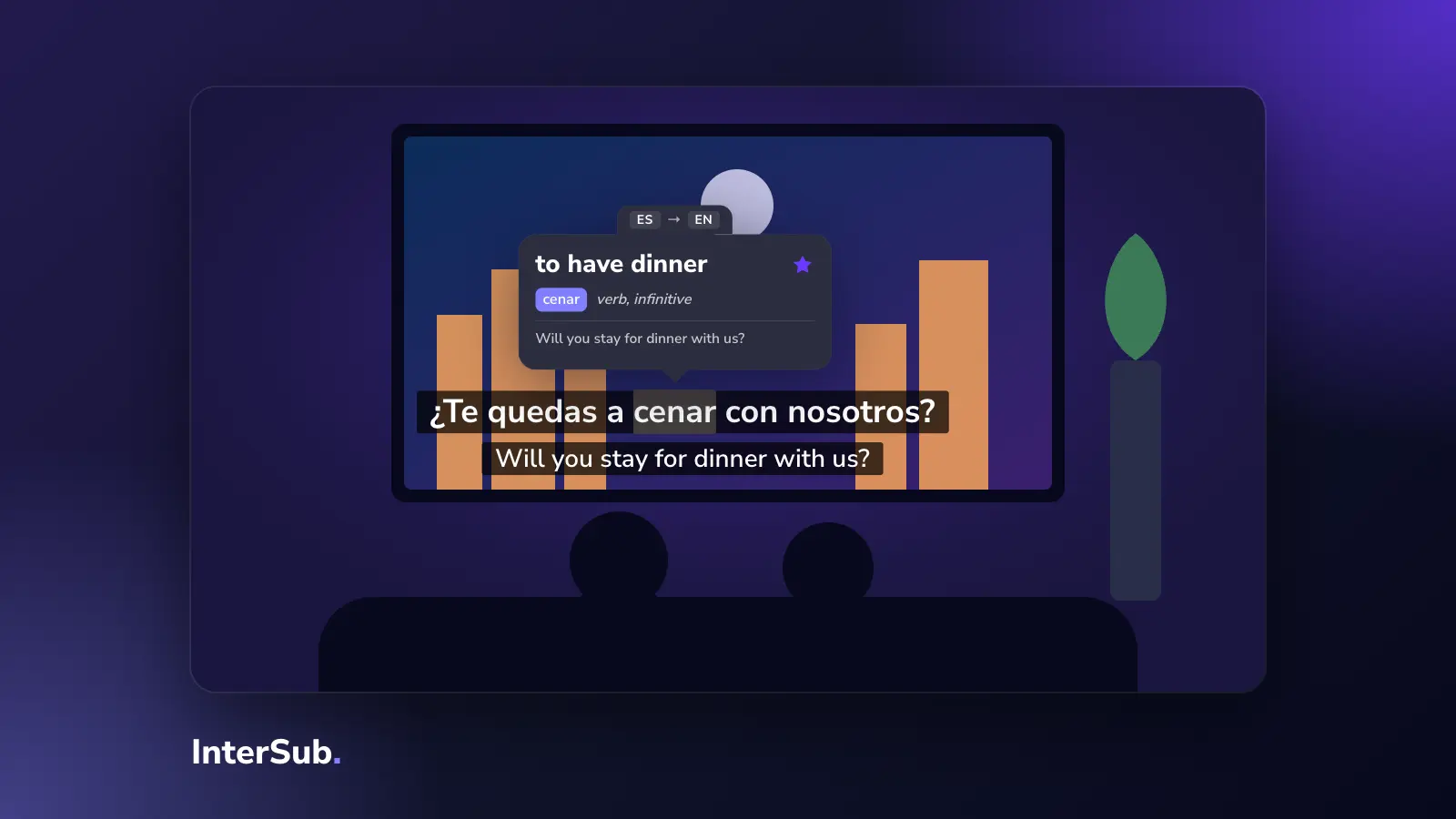
- Dual subtitles. The original line on top, your language below, so you know what you are saying. Hover over a word to see its translation; it goes to your Wordbook.
- Subtitles only on pause. Subtitles stay hidden while the video plays and appear when it stops. Combined with shadowing, you first try to catch the line by ear, then check it in the pause. You can also show only the second line on pause and keep the original visible.
The same works on course platforms such as Coursera and Udemy, which is handy for shadowing a lecturer in English. The full list of settings is on the dual subtitles extension page.
A 10-minute daily routine
Use one scene of two to three minutes and keep it for a week.
- Minute 0–2: watch the scene with dual subtitles. Look up anything unclear.
- Minute 2–6: shadowing mode on, pause at 2×. Repeat every line out loud.
- Minute 6–8: pause at 1×, or switch on subtitles only on pause and repeat from memory.
- Minute 8–10: shadowing off. Speak along with the scene without stopping.
Once a week, record yourself in the last step and compare it with the first recording. By the end of the week you'll know the scene almost by heart, and you'll catch its phrases the next time they come up in a different show.
Frequently asked questions
What is the shadowing technique?
It is a speaking and listening exercise: you play a recording in the language you are learning and repeat what you hear out loud, copying the speaker's sounds, rhythm and intonation as closely as you can. It started in interpreter training and is now common among language learners.
Does shadowing really work?
Studies with Japanese learners of English found that regular shadowing improved listening, especially the ability to pick out words in fast speech, and that lower-level learners gained the most. It is a training exercise, not a full method, so combine it with plenty of listening and real conversation.
How long should I shadow each day?
Ten to fifteen minutes a day is enough to start. Short daily sessions with the same clip work better than one long session a week, because the gains come from repetition.
What is the difference between shadowing and repeating?
Repeating means listening to a whole line and then saying it in the pause. Shadowing means speaking along with the audio, a fraction of a second behind the speaker, with no pause. Most learners start by repeating and move to real shadowing once a clip feels familiar.
Can beginners use the shadowing technique?
Yes, with easy material. Pick slow, clear speech where you understand most of the words, keep clips short, and start with a pause after every line. Research suggests lower-level learners often benefit the most.